The Ourika Valley and the Atlas Foothills
A day on the road south of Marrakech into the Ourika valley, where villages are built from the same red earth as the hills around them.
South from the city
The Ourika valley runs south from Marrakech into the High Atlas, following the Ourika river up into the mountains. For most of the way the road is flat and open; then the hills close in quickly and the earth turns red.
The villages along the valley are Amazigh, and many are still built the old way, from earth taken from the ground nearby. The result is that the villages are the colour of the hills they stand on. It is the same idea as the walls of Marrakech, on a smaller scale and in a steeper place.
The roadside
The road is lined with stops for travellers: pottery laid out on the verge, rugs and bags hung from every available beam, and argan cooperatives selling oil and cosmetics. It is commerce, not scenery, and it is also where most of the colour on this road is.
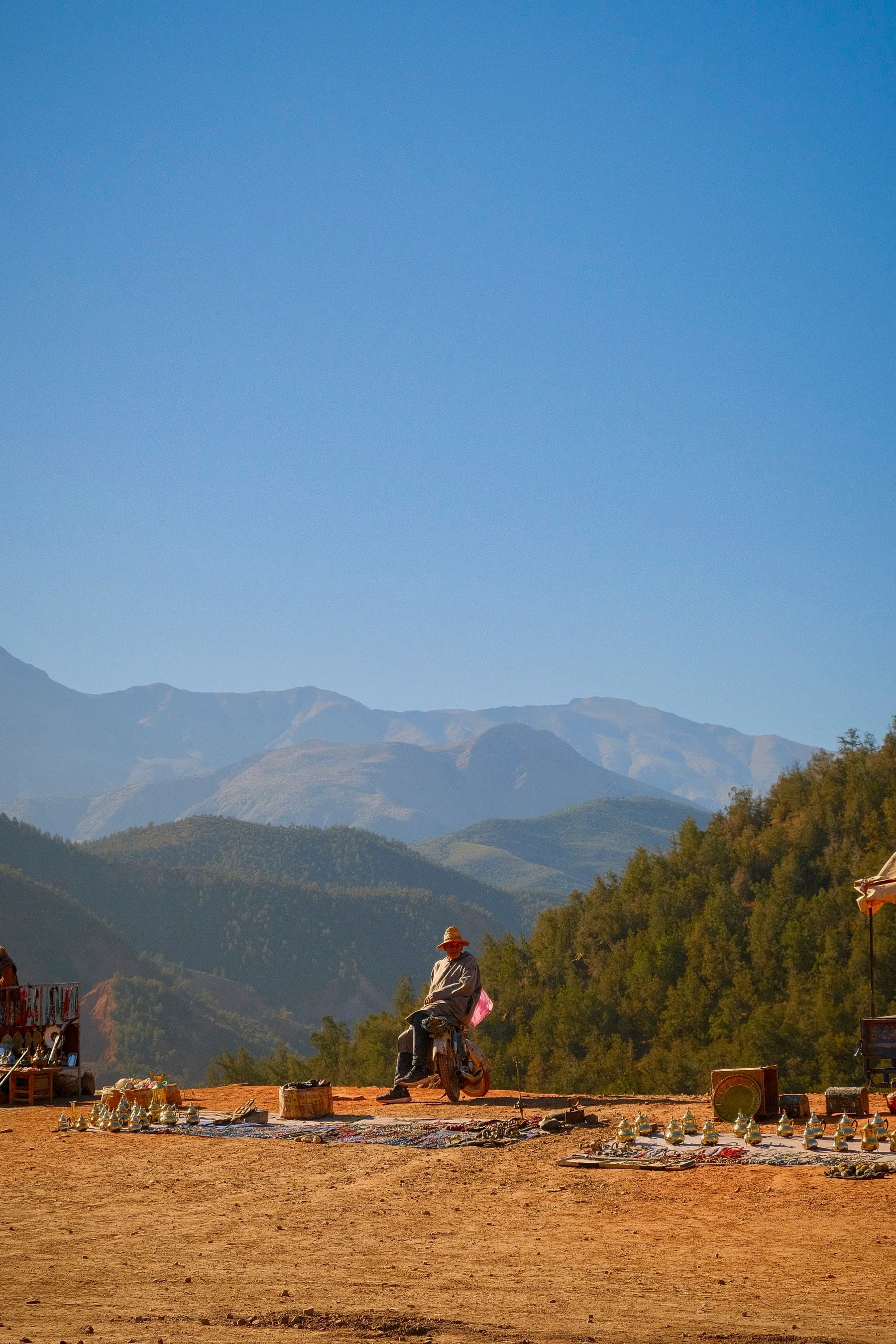
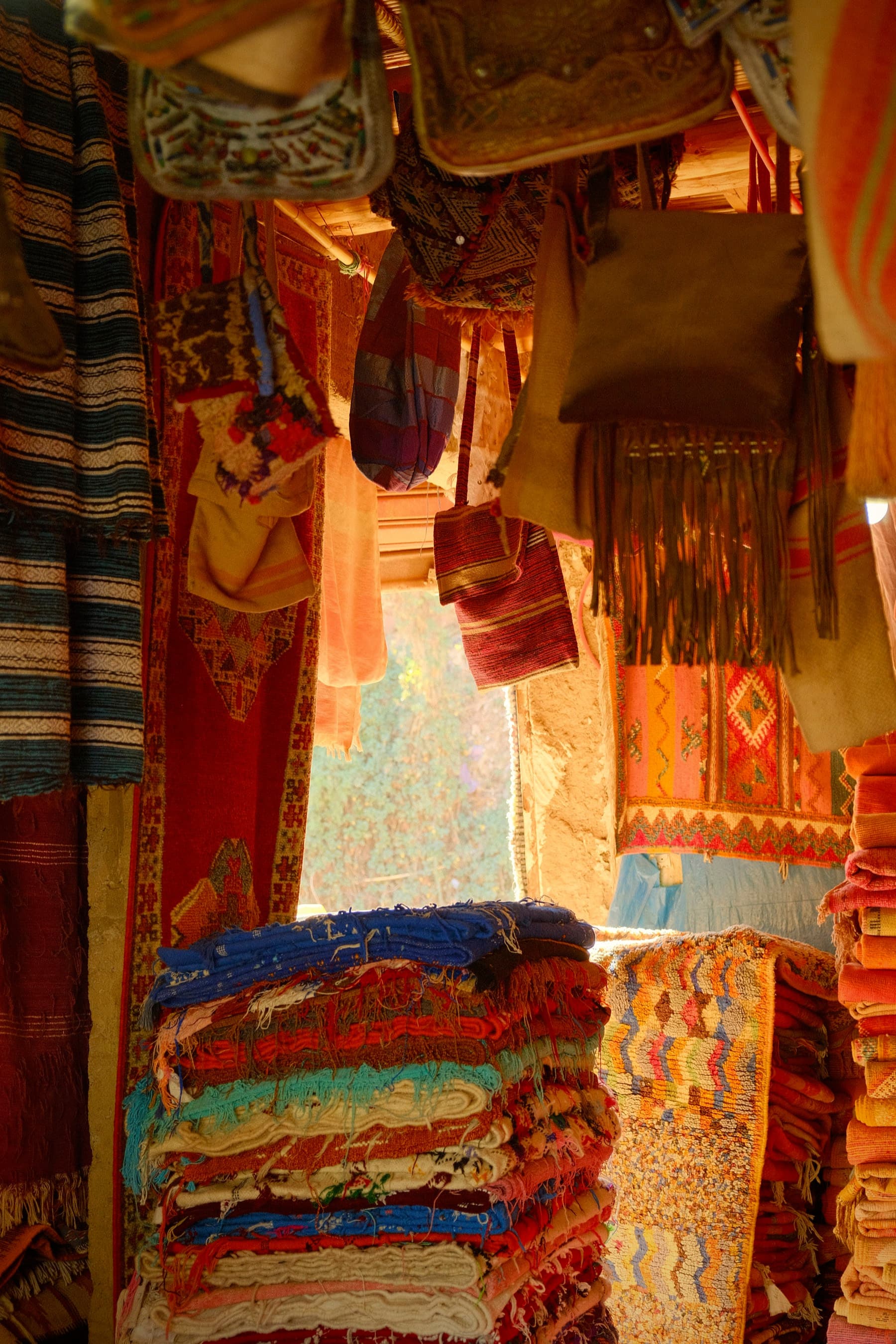
Two prints came from the late morning. One is a roadside market on a slope, goods spread across the ground with the mountains standing behind it. The other, twenty minutes later, is a stall hung floor to ceiling with textiles, layer on layer of pattern and orange.
January light
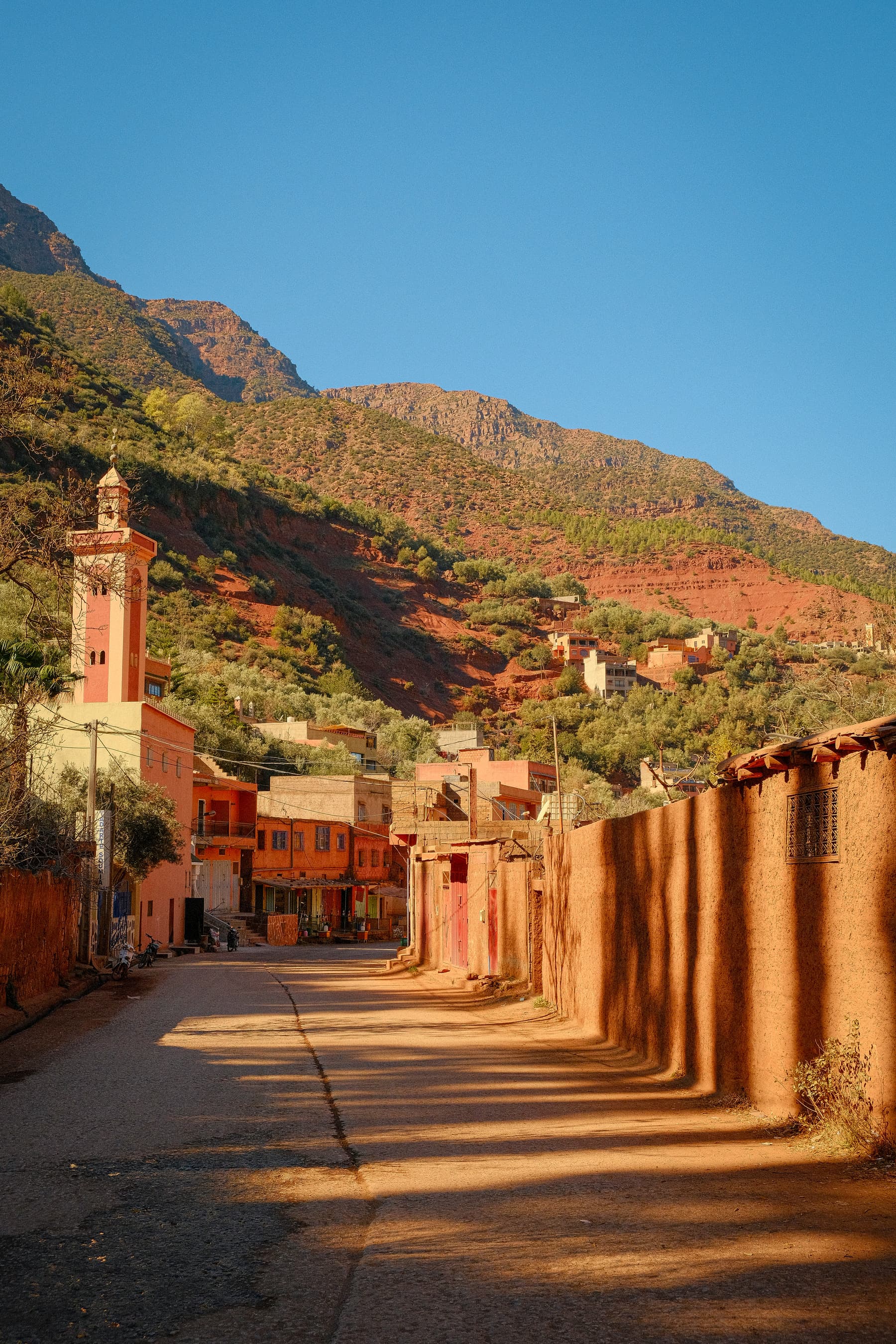
In January the sun stays low even at midday, and in the valley that is a gift: walls throw shadows at one o'clock that in summer would only appear at dusk. The village road we kept was made just before one, a long earth wall laying stripes of shadow across the lane toward a pink minaret, with the red hills behind.
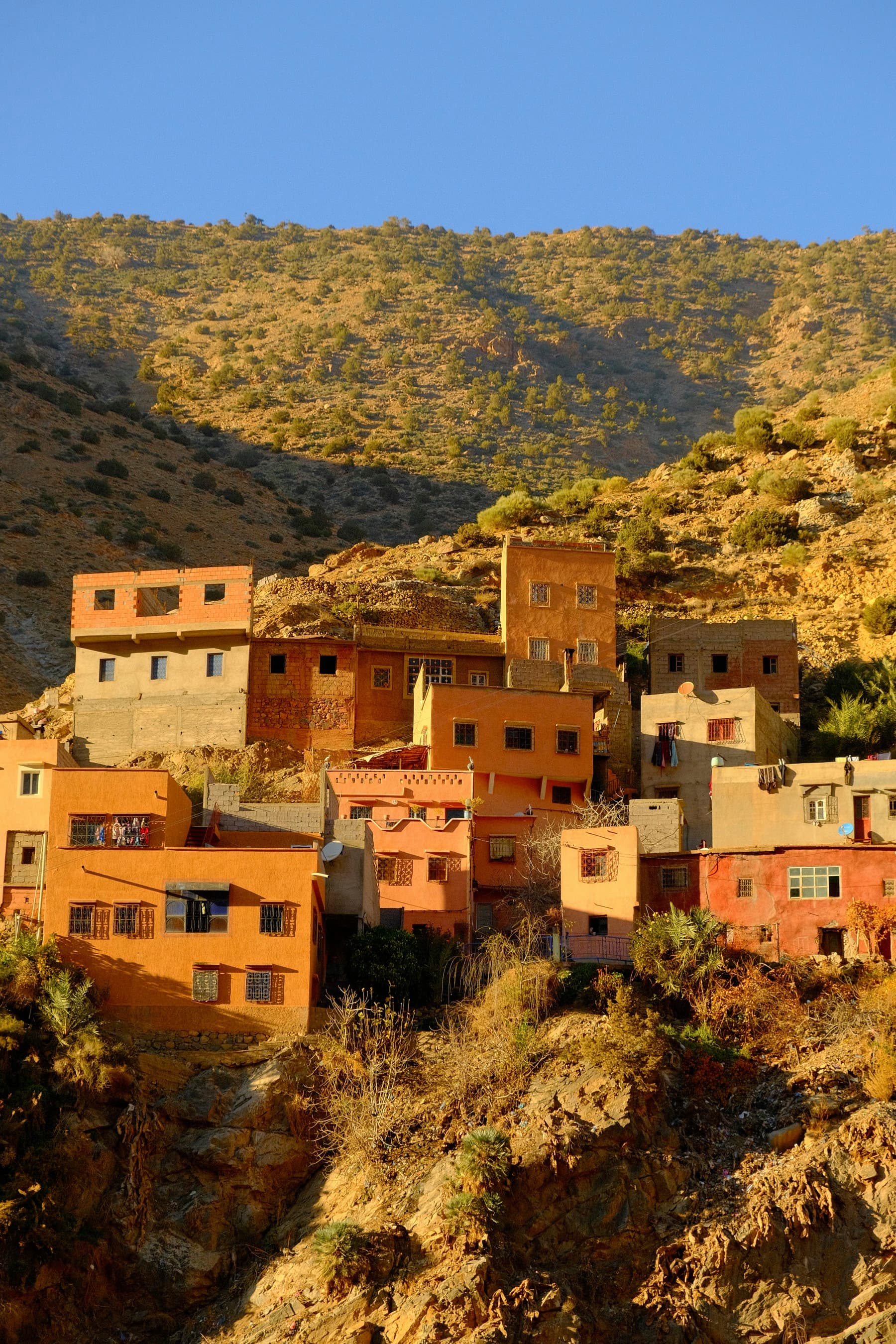
By late afternoon the light had gone warm and sideways. The last frame of the day is a village stacked up an Atlas hillside, its houses exactly the colour of the ground they rise from.
