Marrakech, and Why It Is Called the Red City
Marrakech is called the Red City because its walls are built of pisé: local, iron-rich rammed earth that dries red-ochre and turns pink late in the day.
Built from its own ground
Marrakech was founded in the second half of the eleventh century under the Almoravids, and much of the old city is built from pisé — rammed earth, packed into forms and left to cure. The earth is local, and it carries a high iron content, which gives it the red-ochre colour the city is named for.
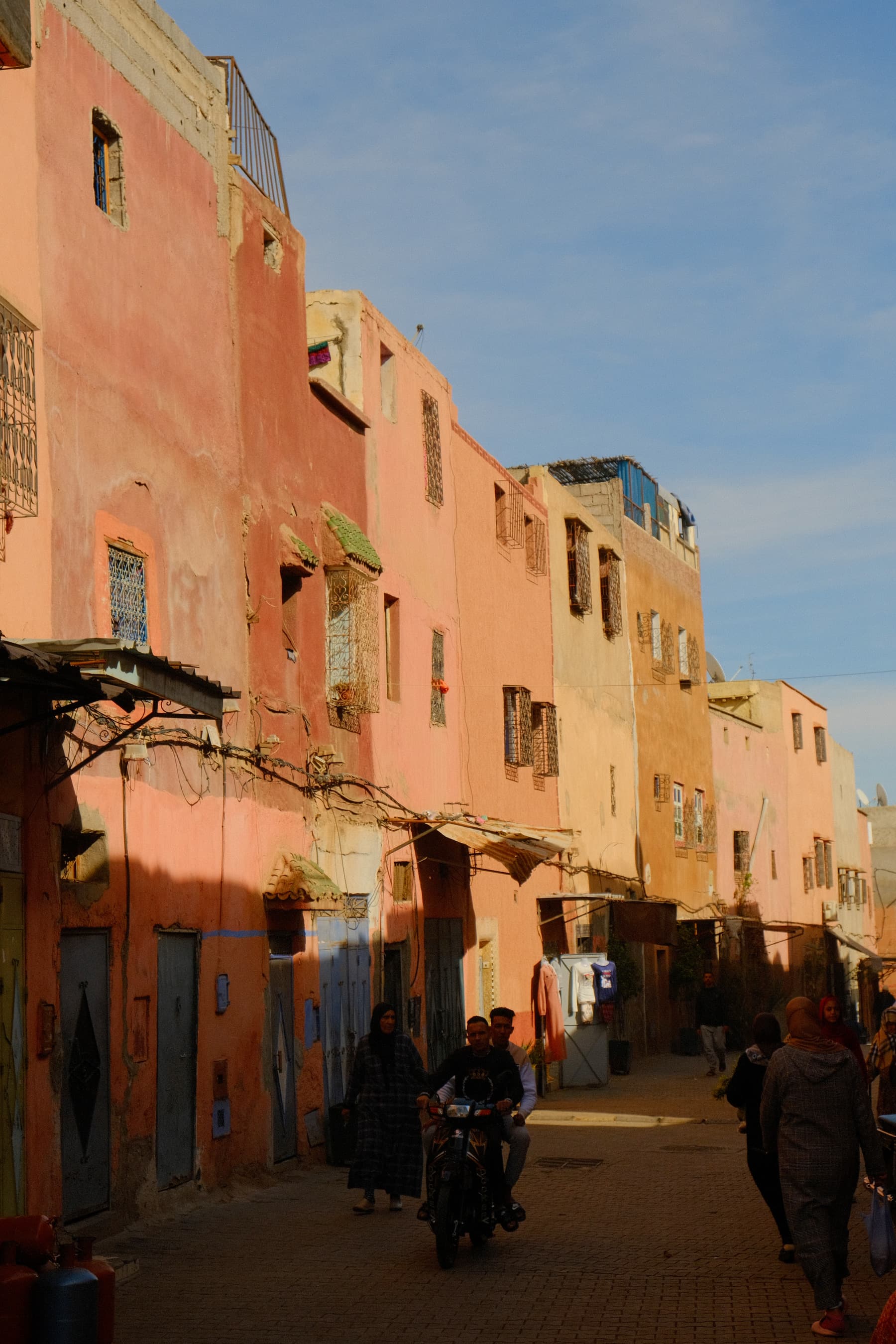
This matters to a photographer more than it sounds. The city is not painted a colour; it is the colour of the material it is made from. That means it responds to light the way ground responds to light, not the way a painted surface does. It goes flat and dusty at noon and comes alive at either end of the day.
The pink hour
Late in the afternoon the walls shift from ochre through terracotta to a genuine pink, and hold there for perhaps twenty minutes before the colour drops out entirely. Everyone who has photographed Marrakech knows about this window, which is precisely why it is difficult — the light is doing so much of the work that it is easy to produce something that is about the light and nothing else.
The frame we kept was not made in that window at all, but in the early afternoon: a wall, an ordinary street, no landmark. If the picture works, it works because of the colour of the earth, and that felt like the honest way to photograph a city named for exactly that.
Inside the souks
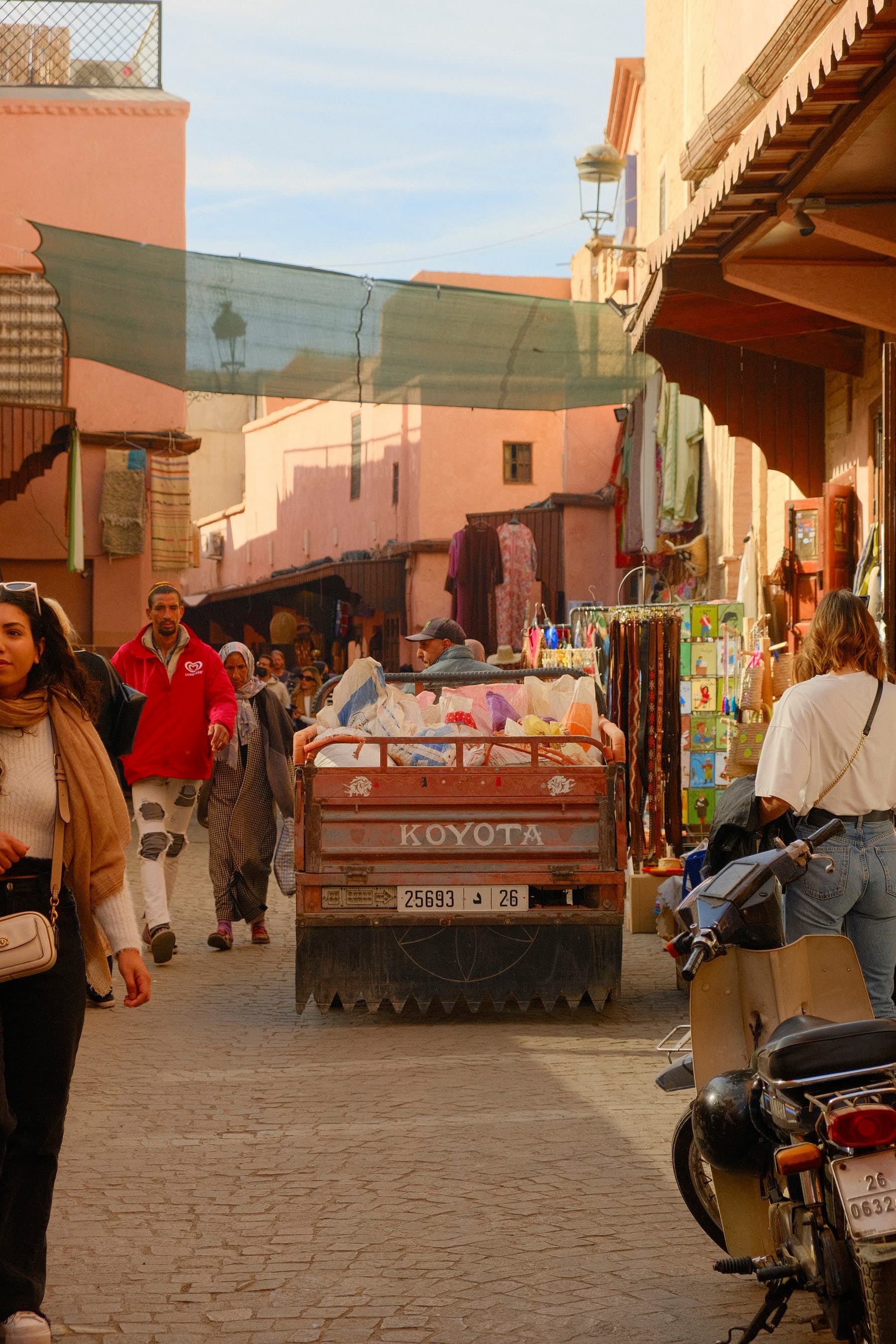
The souks north of Jemaa el-Fnaa are covered, and the roofing is often slatted or partial, so the light arrives in bars and patches. It is high contrast and it moves. You cannot control it and there is no point trying; you find a spot where the light falls somewhere useful and wait for the street to arrange itself.
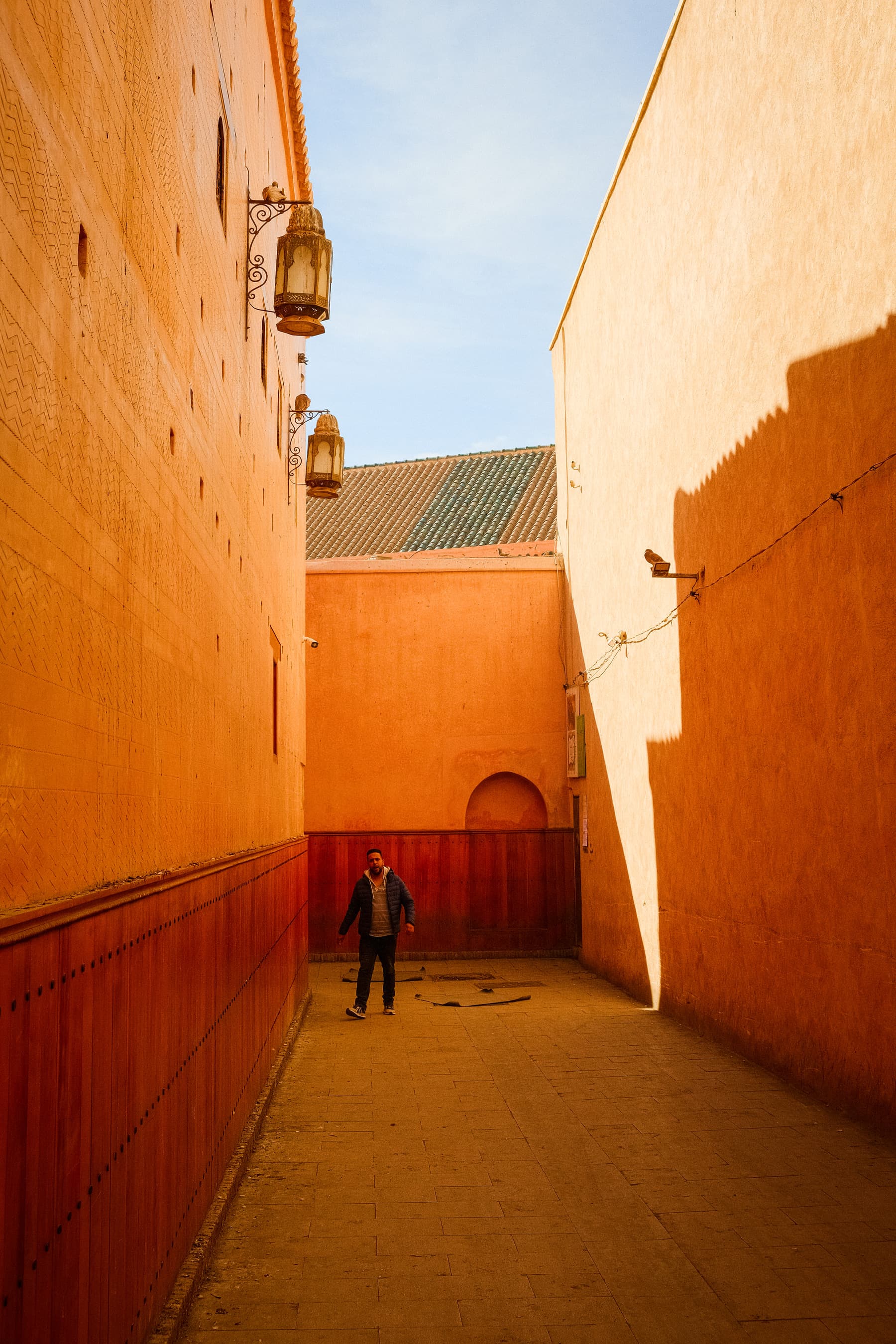
One print came out of that: a lane under a canvas shade, shoppers and awnings on both sides and a loaded motor-cart pushing through the middle of it. Away from the stalls, a narrow passage of ochre walls gave the opposite picture — one figure, and the light cutting a single hard edge down one side.
Away from the crowd
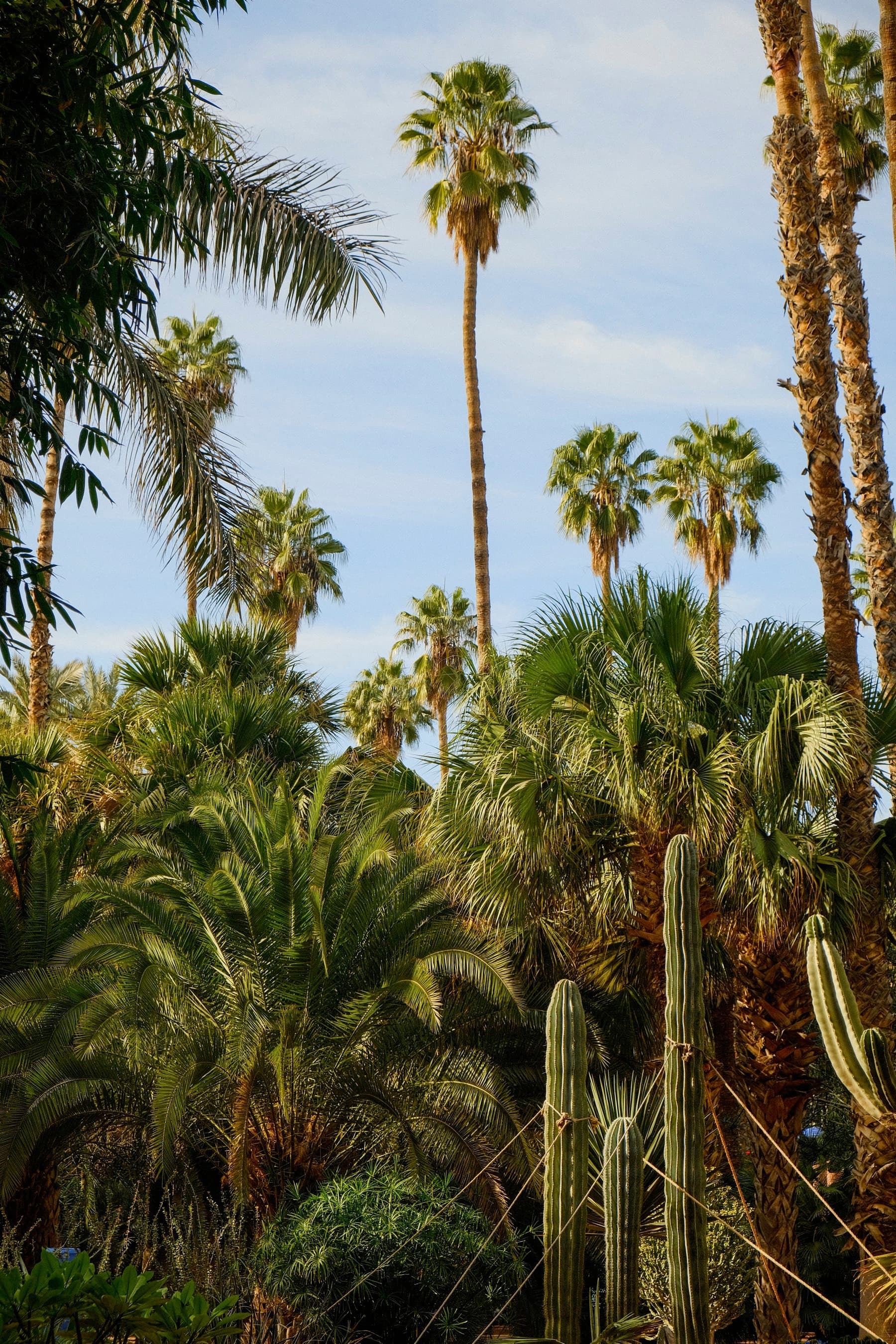
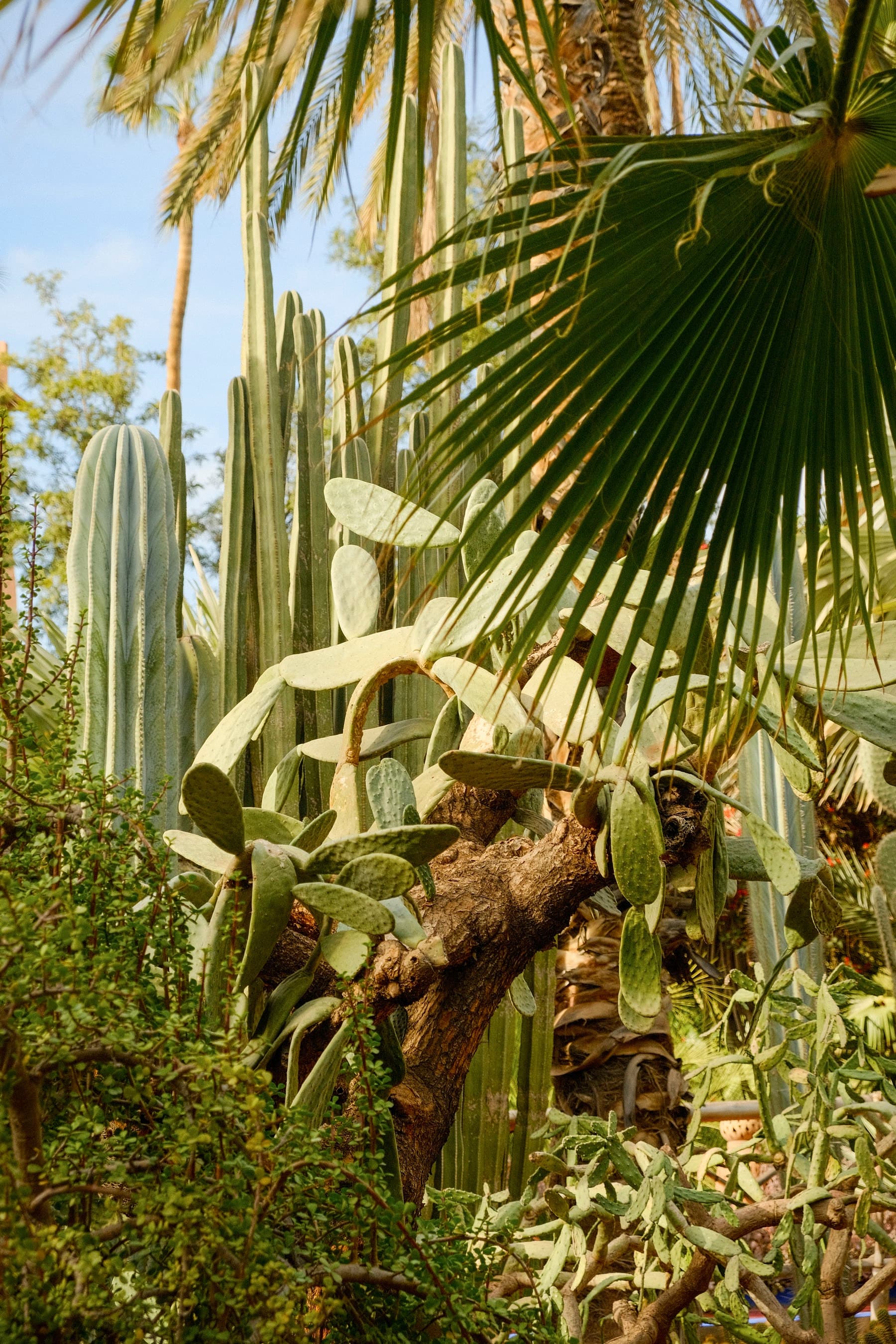
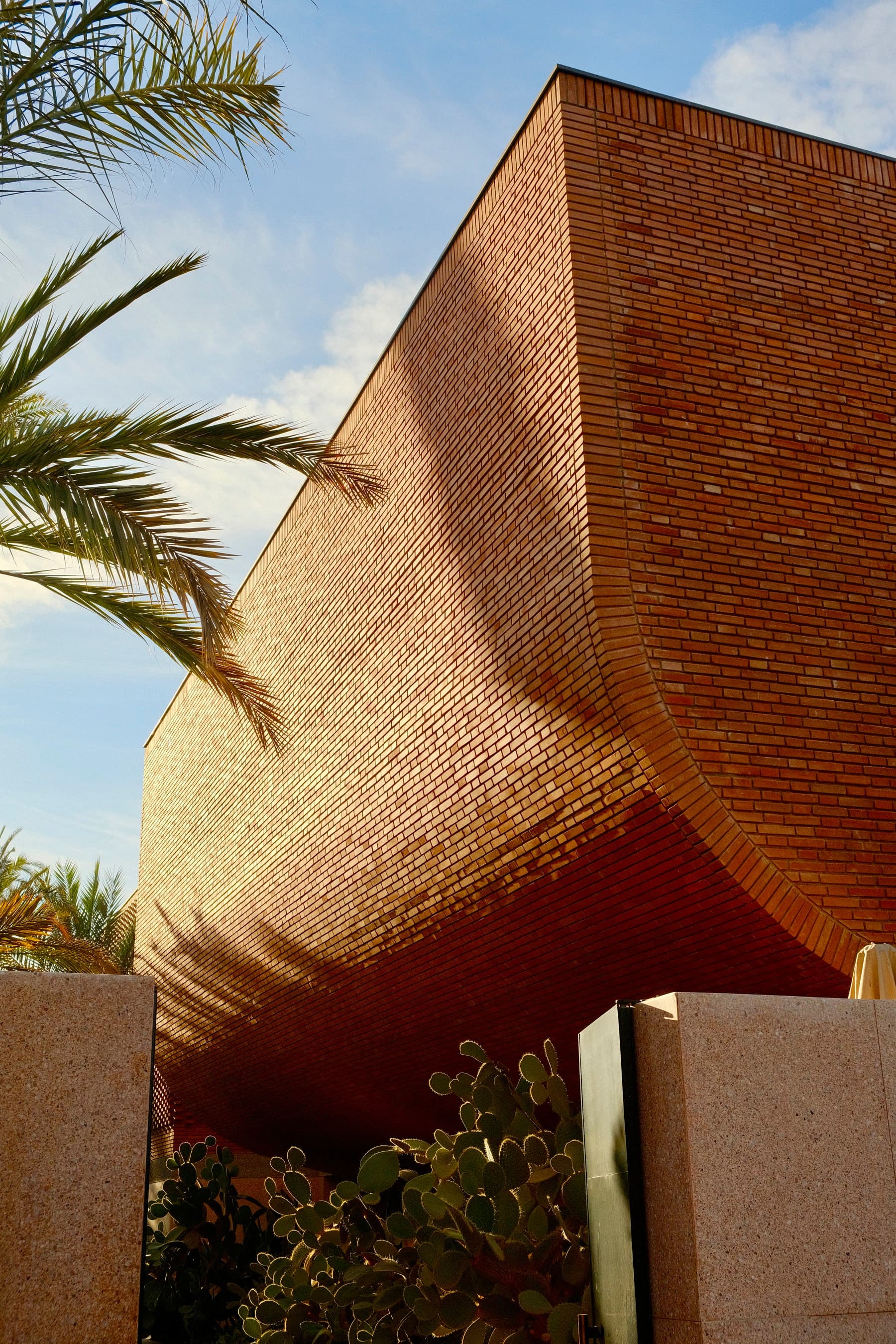
Not everything here is the medina. There are gardens in the city where the planting is dense enough to cut the noise entirely, and where the interest is structural rather than architectural — palm, cactus, the geometry of leaves against a plain wall. Those pictures are the counterweight to the souk frames. A room of prints needs somewhere for the eye to rest.
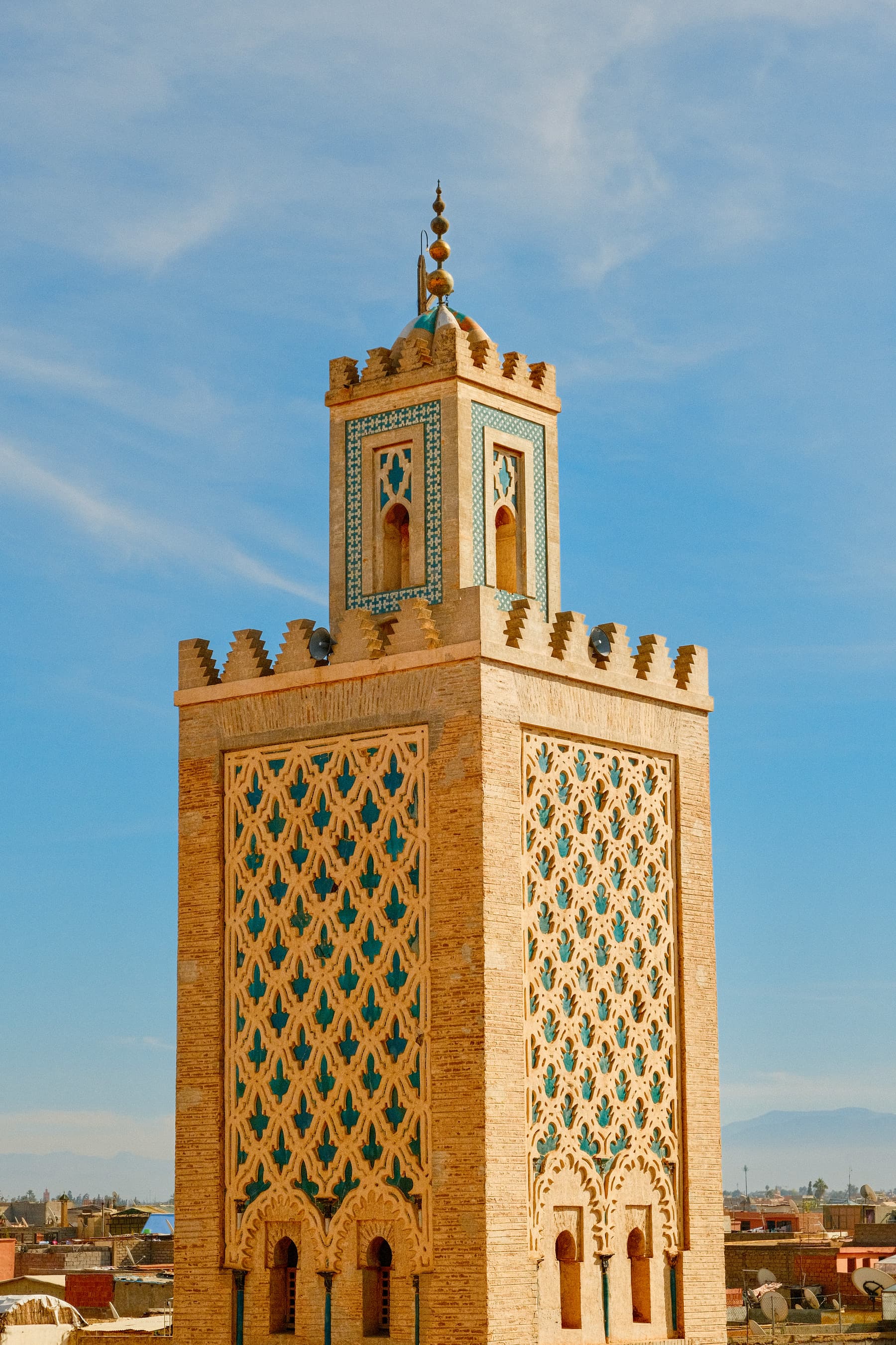
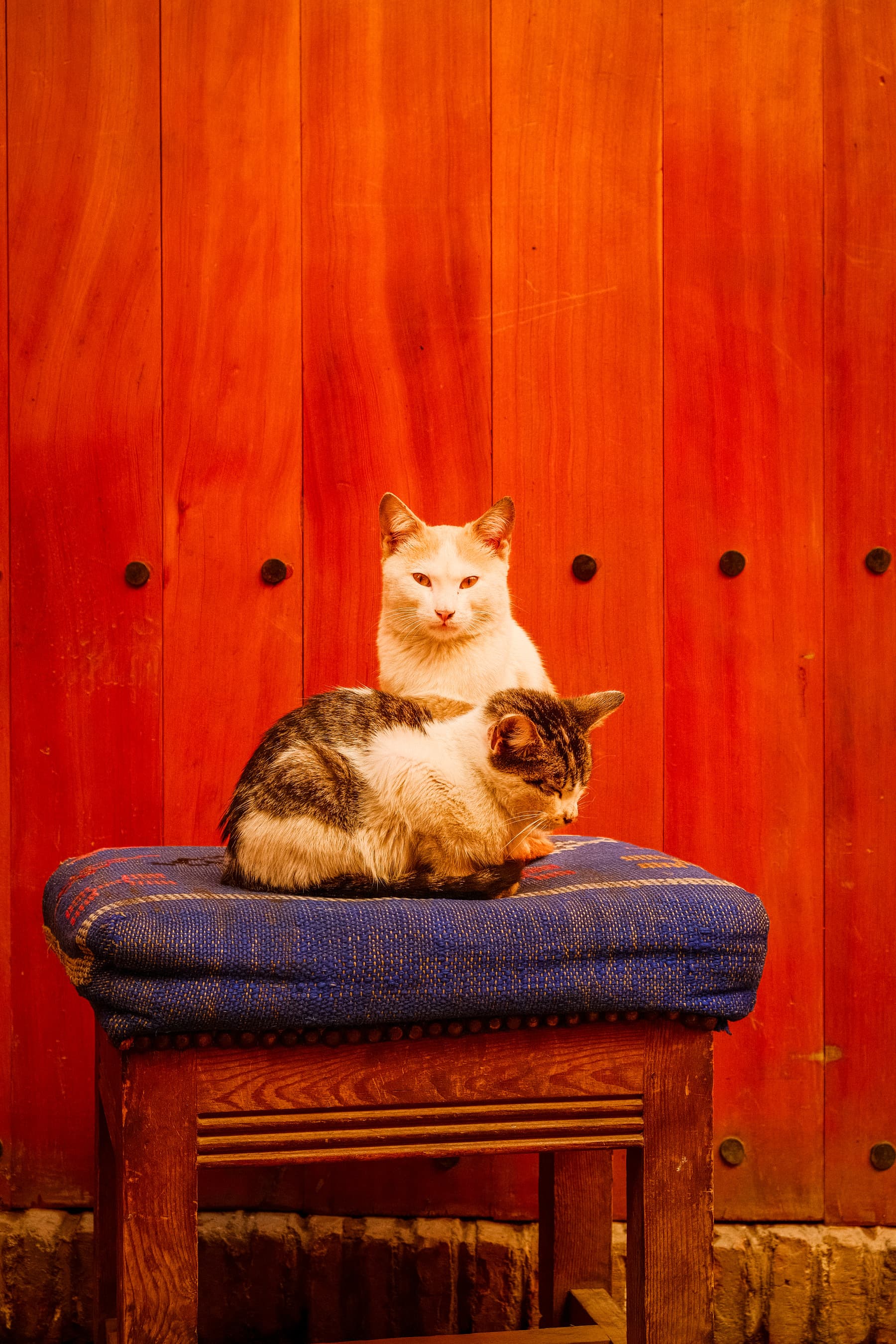
Nearer the Kasbah, the minaret of the Kasbah Mosque stands over the rooftops, its green-and-white tiled lattice sharp against a clear sky. Not far off, two cats had claimed a blue cushion on a wooden stool in front of a red door, and did not move for the camera.