Le Train Jaune: the Little Yellow Train of the French Pyrenees
The little yellow train of the Pyrenees climbs to the highest railway station in France, and has been doing it in Catalan colours since 1910.
Yellow and red on purpose
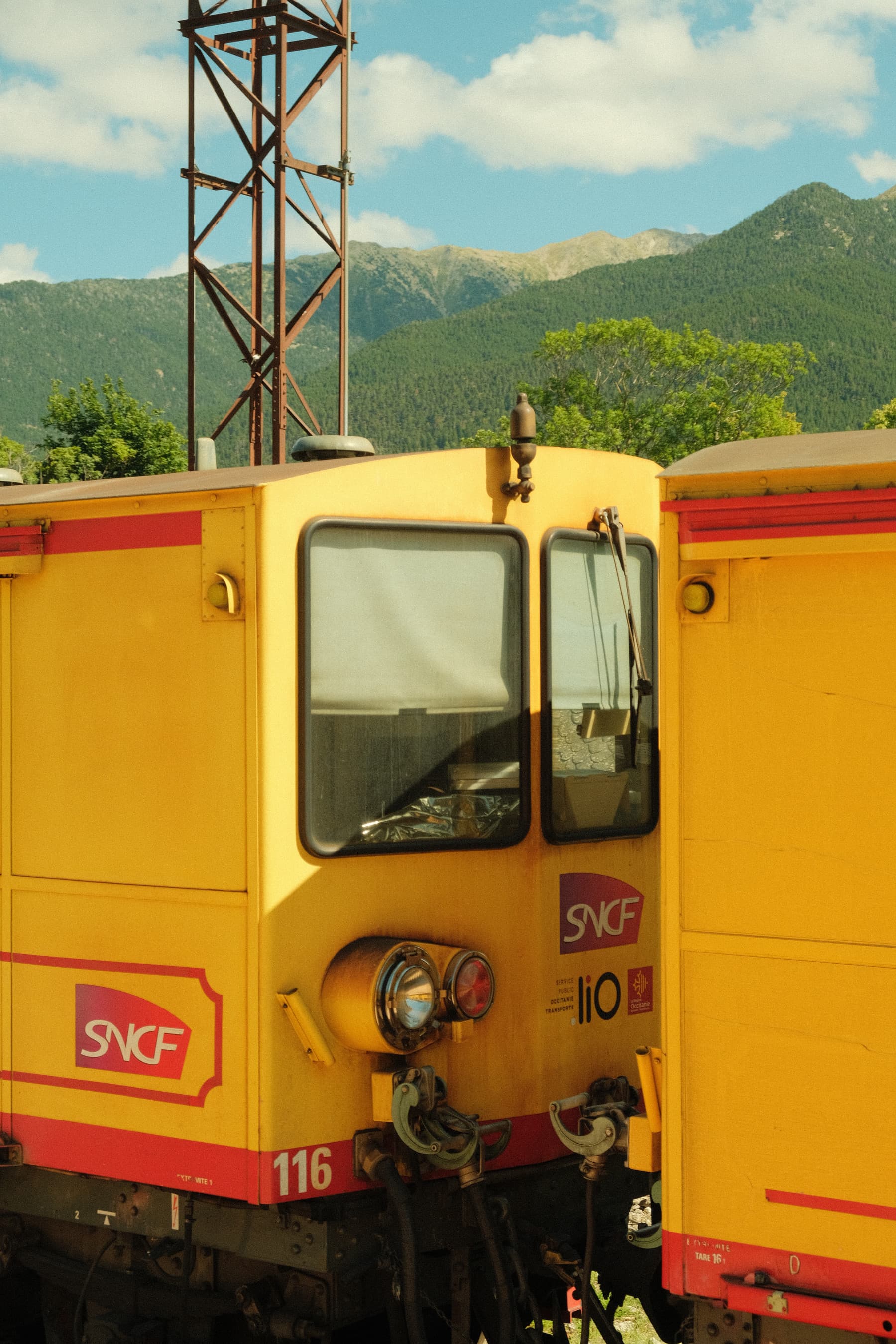
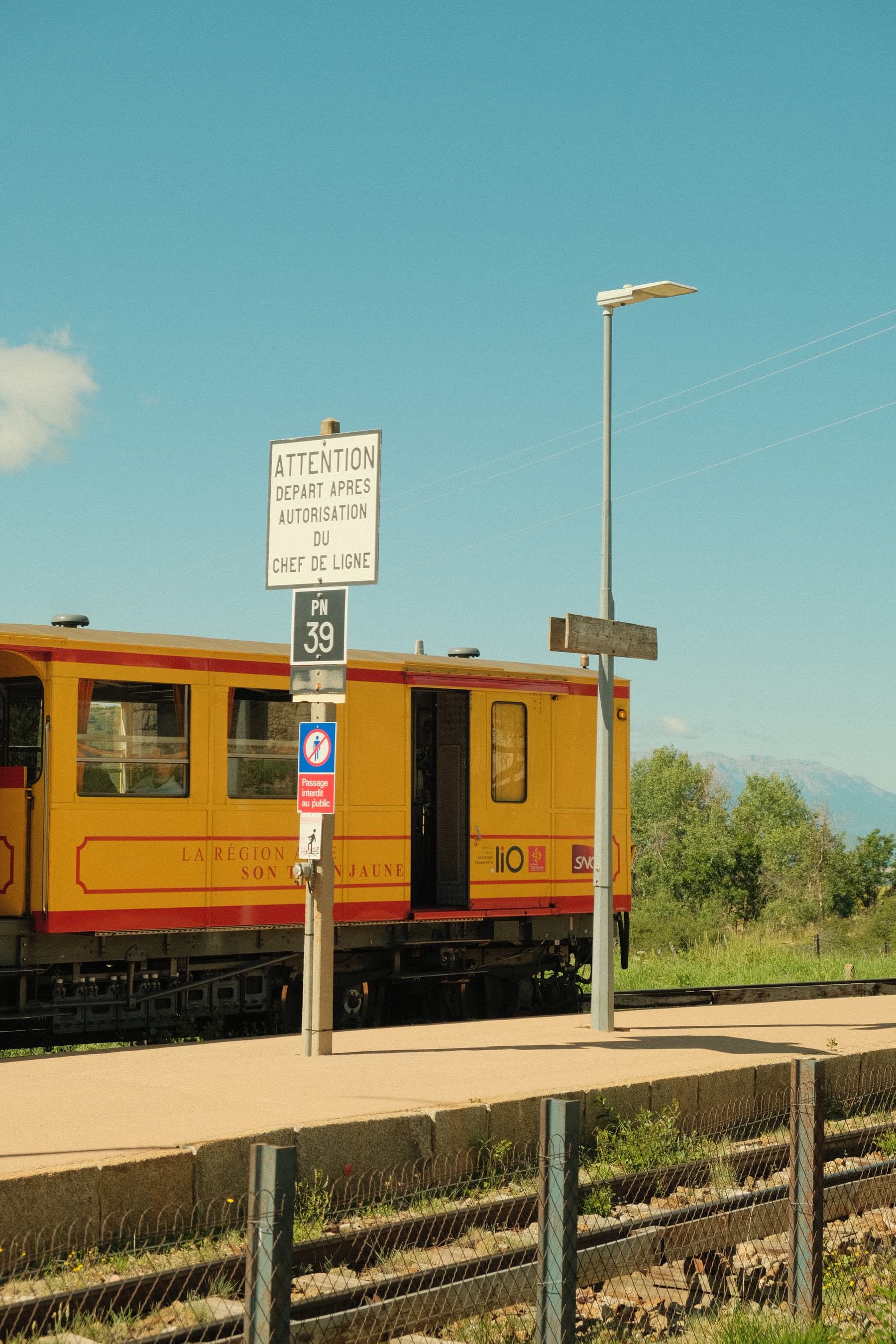
The Train Jaune — Tren Groc in Catalan, and le Canari to people who live along it — runs through the eastern Pyrenees between Villefranche-de-Conflent and Latour-de-Carol. It is painted yellow and red, and the choice is not decorative: those are the colours of the Catalan flag, in a region that has been Catalan far longer than it has been French.
The Cerdagne line that carries the Train Jaune is narrow — metre gauge, 63 kilometres end to end, 22 stations — and is electrified with a third rail rather than overhead wire. Services opened in stages from 1910. Most of it was built to connect high mountain communities that had no practical road link, and it still stops at places too small to justify a station anywhere else.
The climb
The climb to Bolquère-Eyne gains well over a kilometre of altitude, ending at 1,593 metres — the highest railway station in France, on the highest metre-gauge railway in Europe. Getting there involves two pieces of engineering that people photograph far more than the trains themselves: the Pont Gisclard, a suspension bridge still carrying rail traffic, and the Séjourné viaduct, a stone arch structure curving across the valley.
In summer some services run with open-sided carriages. They are cold, loud, and completely worth it — the only way to photograph the line from the line, with nothing between the lens and the valley.
Photographing a moving yellow object
A bright yellow train in a green valley is an easy subject and a difficult picture. The colour is so dominant that the frame tends to become about the train and nothing else, which is a waste of the landscape it is crossing.
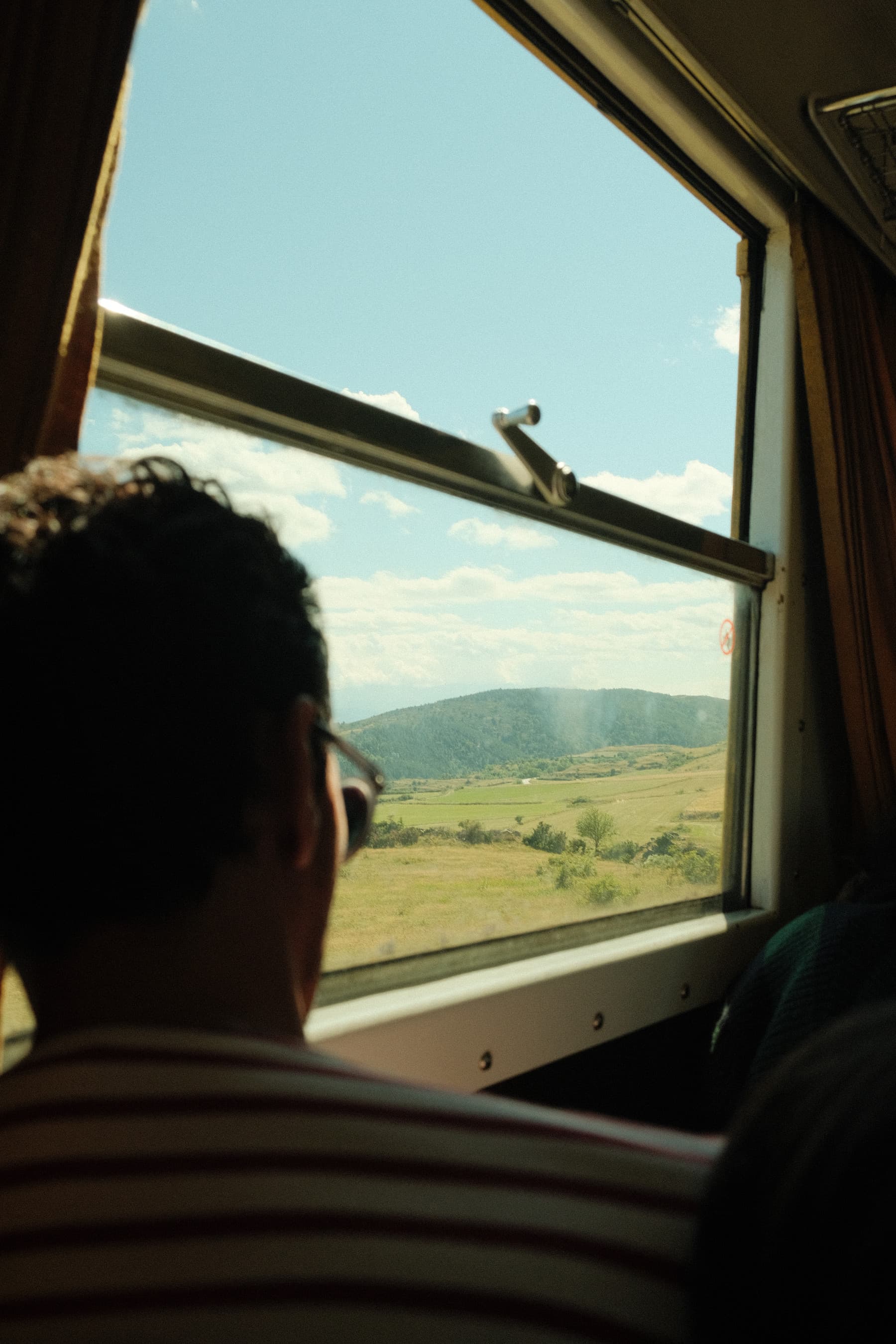
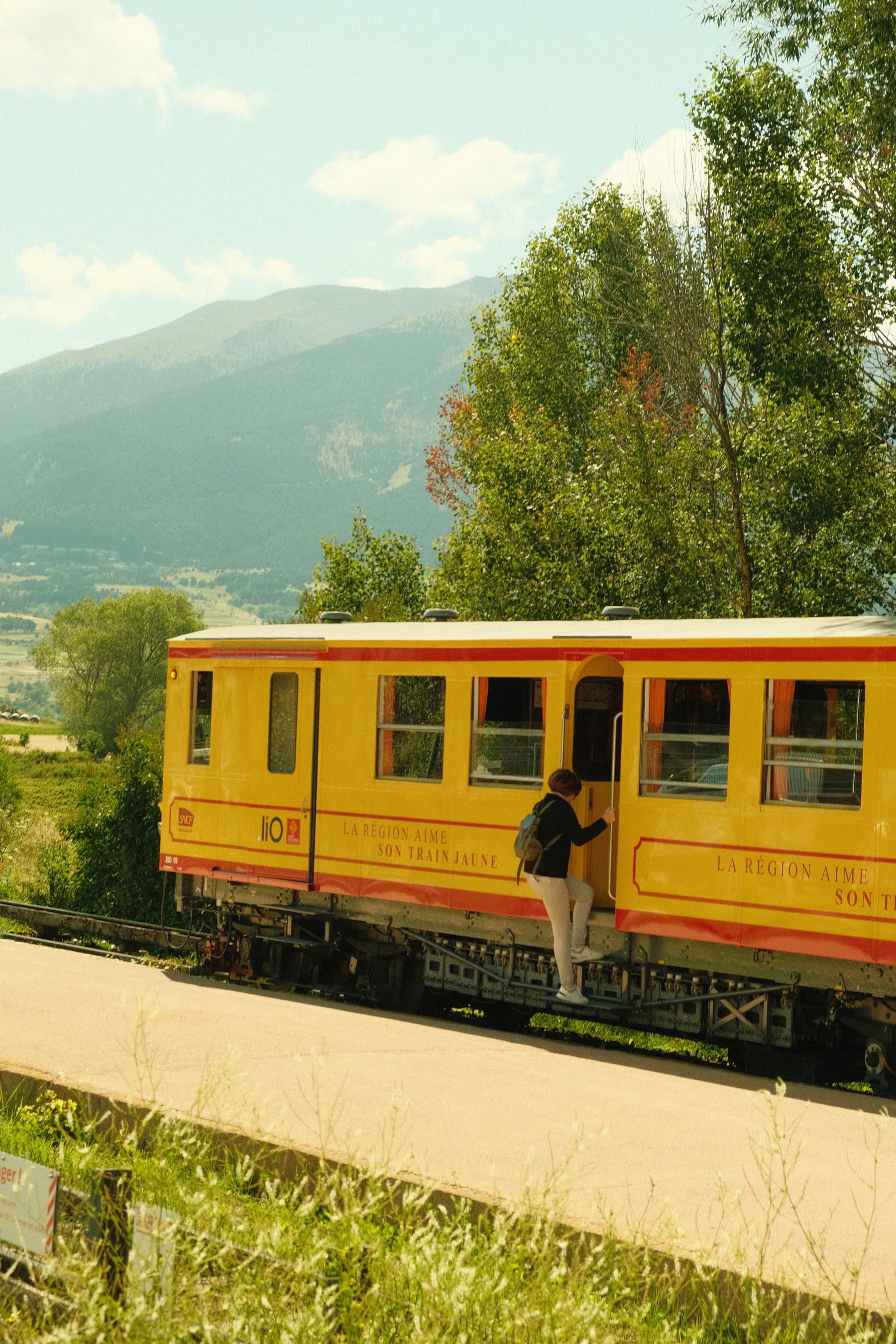
The frames that held up were the ones where the train is small — a mark of yellow somewhere in a much larger view — or the ones made from inside, where it is not visible at all and you get the thing the passengers actually see. One of the prints in this set is simply a window and what was beyond it. Another catches a passenger climbing aboard at a halt, the railcar small against the trees and the mountains behind.
There is also the waiting. Services are infrequent, especially outside high season, so a composition you like may get one attempt that day. That constraint is not a bad thing. It forces you to compose properly and then be still.
If you go
Villefranche-de-Conflent, the fortified village at the lower end of the Train Jaune line, is worth its own afternoon. Check the timetable before travelling rather than after — the service pattern varies considerably by season, and the open carriages are not on every departure.
